mirror of
https://github.com/Anduin2017/HowToCook.git
synced 2026-05-18 13:21:27 +08:00
 ac0dfaab6d
Use dotlang AI translation (aiursoft-instruct:latest via Ollama) to
translate all Chinese content to English under en/ subfolder:
- en/dishes/: all recipe categories (aquatic, breakfast, condiment,
  dessert, drink, meat_dish, semi-finished, soup, staple, vegetable_dish)
- en/tips/: learn/ and advanced/ cooking guides
- en/README.md, en/CONTRIBUTING.md, en/CODE_OF_CONDUCT.md

The mkdocs-static-i18n plugin (docs_structure: folder) serves Chinese
at the root and English at /en/, with a language switcher in the UI.

Co-authored-by: Copilot <223556219+Copilot@users.noreply.github.com>
1.8 KiB
1.8 KiB
How to Make the Perfect Boiled Egg
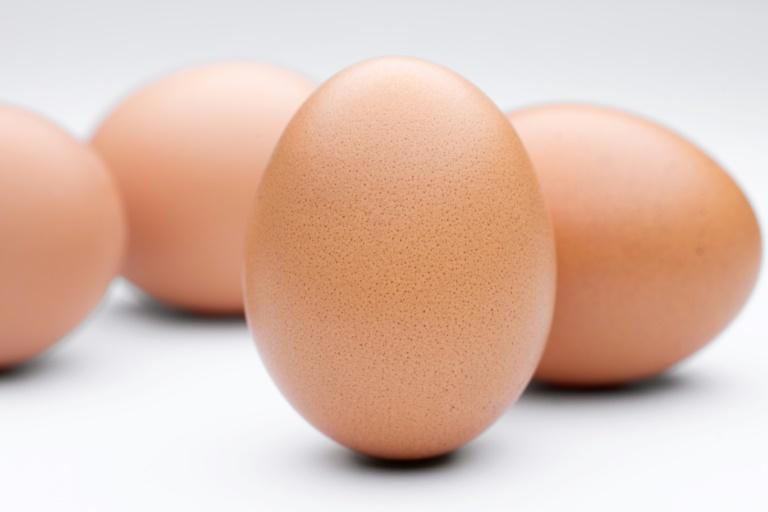
The circulatory boiling method developed by scientists achieves a dense yolk, uniformly set white, and maximum nutrient retention simultaneously. It requires precise control of temperature and time, making it challenging.
Estimated Cooking Difficulty: ★★★☆☆
Essential Ingredients and Tools
- Fresh eggs (AA grade recommended)
- Pot of boiling water at 100°C (diameter ≥ 15cm)
- Pot of warm water at 30°C (diameter ≥ 15cm)
- Timer
- Slotted spoon
Measurements
Per serving:
- 1 egg (approx. 60g)
- 1500ml of boiling water at 100°C
- 1500ml of warm water at 30°C
Instructions
- Prepare two pots of water: Pot A maintains boiling water at 100°C, and Pot B maintains warm water at 30°C.
- Use the slotted spoon to place the egg into Pot A and start the timer.
- Precisely transfer the egg to the other pot of water every 2 minutes.
- Repeat the transfer process a total of 16 times (total duration 32 minutes).
- After the final transfer, let the egg rest in Pot B for 30 seconds.
- Immediately place it in ice water (0°C) to stop the cooking process (maintain for 30 seconds).
- When peeling, start from the blunt end (air cell) and peel the membrane along the longitudinal axis.
Additional Information
- Key Parameters:
- Yolk center temperature: 67±1°C
- White layering temperatures:
- Outer layer: 100°C→87°C
- Middle layer: 87°C→55°C
- Inner layer: 55°C→30°C
- Nutritional Advantage: Polyphenol content is 23% higher than traditional boiling methods.
If you encounter any issues or have suggestions for improvement while following this guide, please submit an Issue or Pull request.